Posts

Showing posts with the label Forensic Pathology

Don’t Miss Out! Discounted Registration for the 14th Emirates Pathology, Digital Pathology & Cancer Conference!!

Image
Don’t Miss Out! Discounted Registration for the 14th Emirates Pathology, Digital Pathology & Cancer Conference!! If you're in the field of pathology or digital pathology, mark your calendar for the 14th Emirates Pathology, Digital Pathology & Cancer Conference ! This event is set to take place in Dubai from December 17–19, 2024, and promises to gather leading experts, researchers, and professionals in the world of pathology. Here’s why you won’t want to miss it and how you can take advantage of discounted registration. Don’t miss out—register today to secure your spot with 40% discount here: https://pathology.utilitarianconferences.com/discounted-registration Why Attend the Emirates Pathology, Digital Pathology & Cancer Conference? 1.         Connect with Top Experts This conference attracts industry leaders and renowned specialists from around the globe. It’s a fantastic opportunity to network, exchange insights, and foster collabor...

Limited Spots left: Virtual/Online Register Now for the 14th Emirates Pathology, Digital Pathology & Cancer Conference!!

Image
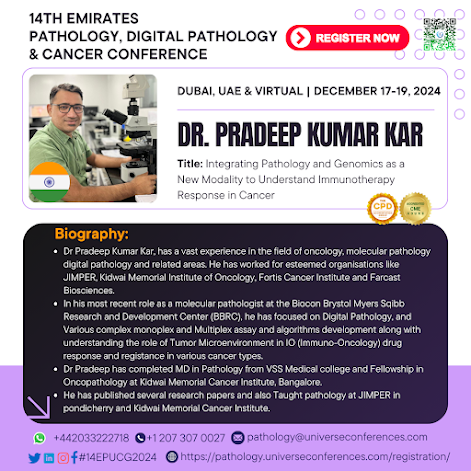
The countdown has begun for the 14th Emirates Pathology, Digital Pathology & Cancer Conference —and with only a few virtual spots left, now’s the time to register! From December 17-19, 2024 , this virtual event will bring together pathologists, researchers, and healthcare professionals from across the globe to delve into the latest in digital pathology, cancer diagnostics, and medical innovation. Why Attend the 14th Emirates Pathology Conference Online ? This year’s virtual format provides a unique chance to gain knowledge, network, and engage with industry leaders—all without leaving your home or office. Here’s why registering for this virtual experience is an opportunity you don’t want to miss: Register for online attendees here: https://pathology.utilitarianconferences.com/virtual-registration 1. Learn from Leading Experts Worldwide The 14EPUCG2024 conference lineup includes globally renowned speakers, including Dr. Bahareh Arbabi . Sessions will cover the lat...

Understanding Lymphoma: Types, Symptoms, and Advances in Treatment

Image
What is Lymphoma? Lymphoma is a type of cancer that originates in the lymphatic system, a crucial part of the body’s immune system. The lymphatic system includes lymph nodes, the spleen, thymus gland, and bone marrow. Lymphoma affects lymphocytes, a type of white blood cell that helps fight infections. There are two main types of lymphoma: Hodgkin lymphoma (HL) and non-Hodgkin lymphoma (NHL). Types of Lymphoma Hodgkin Lymphoma (HL) Hodgkin lymphoma is characterized by the presence of Reed-Sternberg cells, which are large, abnormal lymphocytes. HL is relatively rare but highly treatable, especially if detected early. It often starts in the upper body, such as the neck, chest, or armpits. Non-Hodgkin Lymphoma (NHL) Non-Hodgkin lymphoma encompasses a diverse group of blood cancers that differ significantly in their behavior, treatment, and prognosis. NHL can arise in various parts of the body and is more common than HL. There are many subtypes of NHL, including: Diffuse large ...

Innovations in Pathology Laboratory Management

Image
Pathology laboratories are at the forefront of medical diagnostics, providing crucial insights that guide patient care. As technology advances, so too does the management of these laboratories. Innovations in pathology laboratory management are enhancing efficiency, accuracy, and overall productivity.  Here’s a look at some of the latest trends and developments that are shaping the future of pathology labs. 1. Automation and Robotics Automation is revolutionizing pathology labs by streamlining repetitive tasks and reducing human error. Automated systems for slide preparation, staining, and even initial image analysis are becoming more commonplace. Robotics are also being integrated into workflows, handling tasks such as sample sorting and transport. This not only speeds up the process but also allows pathologists to focus on more complex analyses and diagnostics. 2. Digital Pathology and Whole Slide Imaging Digital pathology involves converting glass slides into digital s...

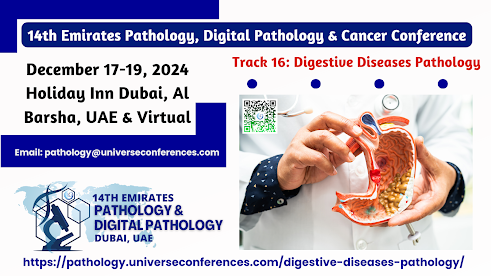
Track 16 Digestive Diseases Pathology

Image
  Digestive diseases pathology, also known as gastrointestinal pathology, is a subspecialty within the field of pathology that focuses on the study of diseases affecting the digestive system. This includes the organs of the gastrointestinal (GI) tract, such as the esophagus, stomach, small intestine, large intestine (colon), liver, gallbladder, and pancreas. Pathologists specializing in digestive diseases pathology analyze tissues and cells from biopsy samples, surgical specimens, or autopsies to diagnose and understand the pathology of various gastrointestinal conditions. Key areas of interest within digestive diseases pathology include: 1.     Inflammatory Bowel Diseases (IBD) : Conditions such as Crohn's disease and ulcerative colitis involve chronic inflammation of the gastrointestinal tract, leading to various clinical manifestations and complications. 2.     Gastrointestinal Cancers: Pathologists study the pathology of cancers affecting the...

The Role of Pathology Conferences in Continuing Medical Education

Image
Pathology conferences play a crucial role in the continuing medical education (CME) of pathologists and other healthcare professionals. These conferences offer a platform for professionals to stay updated with the latest advancements in the field, exchange knowledge and experiences, and enhance their skills. Here are some key ways in which pathology conferences contribute to CME: Knowledge Expansion : Pathology conferences provide access to cutting-edge research, new technologies, and best practices in the field. Attendees can learn about the latest developments in pathology through lectures, workshops, and interactive sessions. Networking Opportunities : Conferences bring together pathologists, researchers, educators, and industry professionals from around the world. This networking opportunity allows attendees to build professional relationships, collaborate on research projects, and exchange ideas. Skill Development : Conferences offer hands-on workshops and training sessions th...

Highlights from the Latest Pathology Conference: Summarize key presentations, research findings, and trends discussed at a recent pathology conference

Image
“Key Highlights from the Latest Pathology Conference" The recent pathology conference showcased a range of cutting-edge research and trends in the field. Here are some key highlights: 1 .  Digital Pathology Advancements : There was significant discussion around the latest advancements in digital pathology, including the use of artificial intelligence (AI) for image analysis and diagnosis. Several studies demonstrated the accuracy and efficiency of AI algorithms in detecting cancer and other diseases. 2.   Precision Medicine in Pathology : Presentations highlighted the growing role of precision medicine in pathology, with speakers discussing the importance of molecular profiling in guiding targeted therapies for cancer patients. The conference emphasized the need for integrating molecular pathology into routine clinical practice. 3.     Innovations in Molecular Pathology: Researchers presented novel findings in molecular pathology, including the discovery of new...

Track 14: Anatomical Pathology, Forensic Pathology, Autopsy Pathology

Image
Anatomical pathology is a branch of medicine that focuses on identifying diseases by examining organs and tissues under macro-, microscopic-, biochemical-, immunologic-, and molecular microscopes. Surgical pathology has changed dramatically over the past century, from the traditional examination of entire bodies (autopsy) to a more sophisticated practise focused on the diagnosis and prognosis of cancer to inform oncology treatment decision-making. Clinical pathology, which involves the diagnosis of disease through the laboratory examination of biological fluids or tissues, is the other of the two areas of pathology. Anatomical pathology is one of them. A common practise among pathologists is general pathology, which combines anatomical and clinical pathology. Distinctions between clinical pathology Anatomic pathology deals with how a doctor skilled in pathological diagnosis processes, examines, and diagnoses surgical specimens. The department that handles test requests more familiar to...